




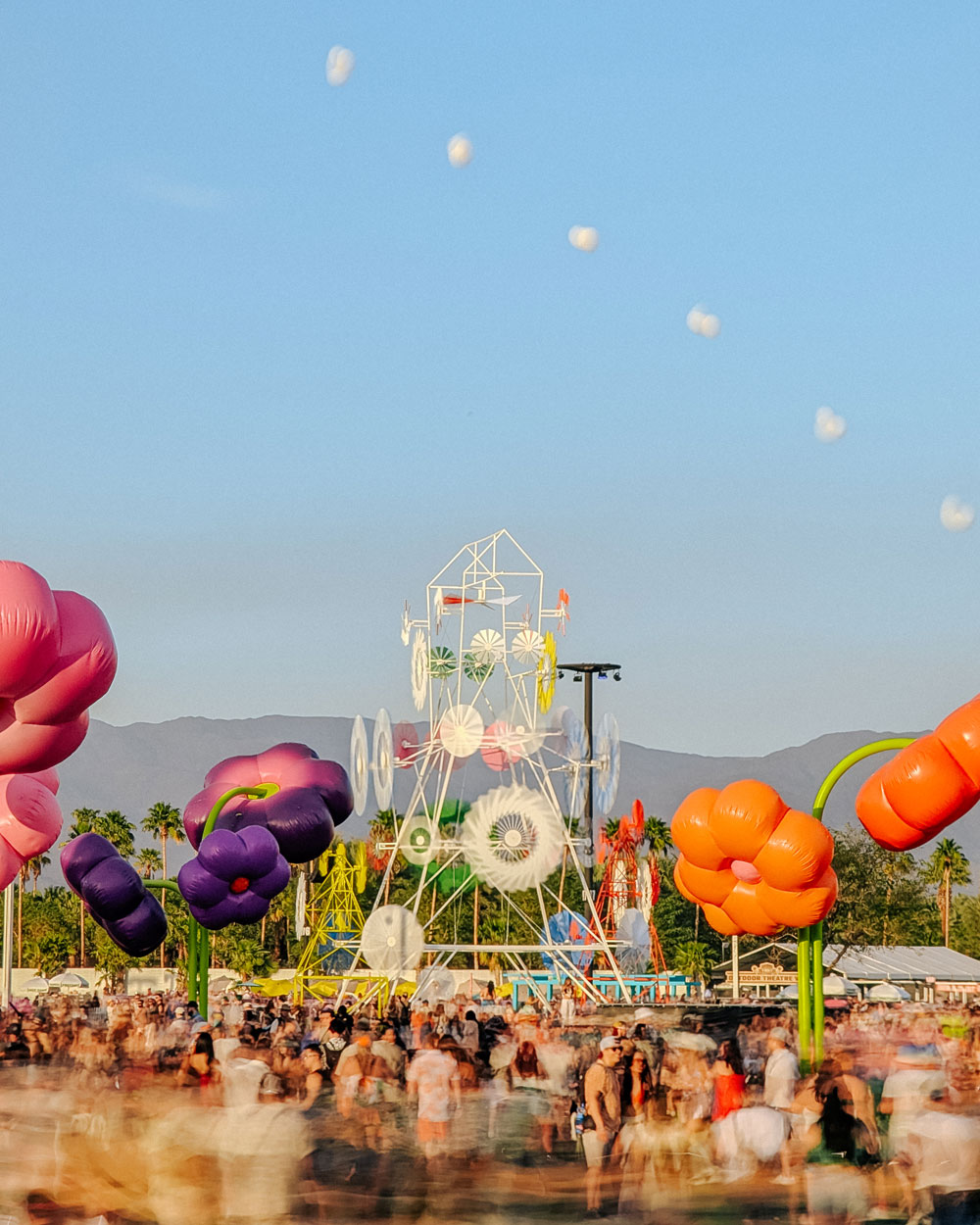
Audio-visual (AV) technology is already impacting music festivals, and over the next decade it will likely further transform how festivals look, sound, and feel – both for people attending in person and those joining remotely. Here are the major ways AV technology is expected to impact the future of music festivals, Bryan Denyer reports with thanks to AV News Award nominees, Delta Live (a Groupe Novelty company) and Naostage for their contributions.
Festivals and largescale outdoor musical events have certainly changed since my first involvement, at the age of 20 as part of the ‘security team’ for the Rolling Stones performance at Knebworth in 1976. Immersion and audience involvement was limited to lighting, dancing and extremely dangerous bonfires in the crowd (not good, but at least it kept us warm after dark). Nowadays, those attending similar events expect a bit more, to the point where festivals and large outdoor event are moving beyond straightforward lighting and audio effect to fully immersive environments. Examples of the direct involvement of AV technologies in the festival landscape include the adoption of LED walls in place of traditional backdrops; the use of projection mapping to turn stages, buildings, and landscapes into moving visuals; the deployment of 3D visuals and volumetric effects synced with music; and the increasing use of augmented reality visuals visible select ably through phones or special glasses.
The extent to which AV technology is deployed at one time depended on the scale, and therefore the budget, of the event – but, as we will see later that is somewhat less of a factor as the cost of AV technology has fallen. Nonetheless, it is the major US festivals, like Tomorrowland and Coachella, and their equivalents in Europe, that already use large-scale visual storytelling to create themed worlds- and the expectation is that this trend will only grow. Audiences won’t just watch performances – they’ll feel like they’re inside them.
Even those organisers sticking to the traditional formulae for festivals will find that, for example, lighting solutions are becoming more intelligent and automated. AI-powered lighting programmed to react to tempo, crowd movement, or mood is available. Dynamic stage designs can be arranged to change throughout a set with real-time synchronisation between sound, lights, and visuals. Some of the most memorable recent events have featured wearable lights or LED wristbands synchronised throughout the crowd. Drones carrying lights are an increasingly popular option for outdoor events. The impact of adopting these and other technologies will be to make performances feel more alive and responsive.
The expert contributors to this article observe that: “Festivals have clearly evolved into multi-sensory environments, as audiences now expect more than just sound and visuals, they want to feel immersed and connected to the performance. At Naostage, we see this shift through real-world deployments in festivals such as Poupet, as well as in concerts and live productions where we witness a strong demand for interactivity. The audience wants every movement to contribute to the visual experience, reinforcing the multi-sensory nature of modern festivals.”
It’s all about the sound
There is no doubt than audio quality has improved immeasurably since my limited Rolling Stones experience. Audio quality was best described as ‘OK’, but it has improved, dramatically due in no small part to new speaker technologies. Advanced speaker arrays can now ensure clear sound everywhere. Other innovations include the development of Spatial Audio that creates 3D sound environments, and even personalised listening zones and other wearable audio technologies. Festivals like Glastonbury, and other multistage events, have already experimented with cutting-edge sound layouts and noise control systems that reduce sound bleed between stages.
Rather saying that it’s all about the sound, perhaps it’s better to say that festivals are mostly about the sound, but that visuals are increasingly important to delivering a true festival experience. To that end we have seen some recent innovations that really make a difference. Take the traditional fireworks at the end of headline sets the world over. These are widely regarded as a bit ‘old hat’. Drone technology is replacing or augmenting fireworks in leading events. Coordinated drone light shows which move aerial visuals above crowds provide safer alternatives to fireworks. Our experts concur: “Audiences are physically involved through dancing, low-frequency bass vibrations, interactive installations, and sensory effects (lighting, heat, smoke). In addition, participatory activities (workshops, immersive performances) turn festivalgoers into active participants. However, this level of immersion still varies across events. This diversity is evident in many events, where immersion is shaped by a different relationship between the audience and the performance. Rather than relying on high-intensity physical stimulation, the experience is built around musical nuance, atmosphere, and visual coherence. In this context, audience engagement emerges through the interplay between artists, staging, and subtle audiovisual elements, illustrating how immersion can be more refined and atmospheric while remaining deeply engaging.”
In the virtual and immersive world and immersive environment of a festival, the social issues of safety, crime, narcotics and drunkenness have become increasingly problematic. AV technology has been shown to improve festival safety and organisation in general. Smart camera systems monitor crowd density. Digital wayfinding screens help with crowd control, with AI predicting overcrowding risks and providing surveillance: “Safety has become a major priority for festival organisers, supported by technologies such as real-time crowd monitoring, AI-driven analytics to prevent overcrowding, and advanced surveillance systems. Mobile apps also play a key role by enabling attendees to receive alerts, access emergency information, or report incidents quickly. In this context, tracking technologies are opening new possibilities for crowd management. We at Naostage are already working on deploying and scaling these systems to support control centres with real-time insights into audience movement and density. This helps anticipate overcrowding, count people, and monitor flow dynamics across different areas. In case of an incident, specific zones can be instantly highlighted using lighting or visual cues, triggered directly by operators pointing to a location on their interface, allowing security or medical teams to respond more quickly. These systems can also help identify bottlenecks, guide crowd movement, and adapt responses in real time, contributing to safer festival environments. Inclusiveness is increasingly addressed through technology by improving accessibility and user experience for diverse audiences. This includes features such as audio descriptions, visual aids, translation tools, and enhanced navigation systems, helping make festivals more accessible and welcoming to all.”
Virtual event digital options
Festivals are traditionally in-person social events, but not everyone will attend festival in person. AV technology enables remote participation and adds additional revenue streams for event organisers, performers and their representatives. Options for live streamed content now include multi-camera production; Virtual Reality (VR) concerts; 360° immersive broadcasts; and increase the reach of an event to global audiences joining in real time. Many believe that festivals will become global digital events, rather than just physical gatherings.
In addition to increasing the reach of an event, digital tools and techniques also enable audiences to become part of the show rather than just spectators. Recent example of digital engagement include crowd voting on visuals or lighting effects; interactive apps controlling parts of the experience; AR scavenger hunts across festival grounds; and real-time audience participation via mobile devices. Our expert contributors caution that deployment of advanced AV technologies is far from mainstream: “The most widely used AV technologies at festivals combine immersive visuals, advanced lighting, and powerful audio systems to create engaging live experiences. What used to be simple augmented displays helping distant audiences see the stage more clearly have now become fully integrated elements of scenography and interactive design. At the core of these setups lies a key technology: tracking. It enables real-time adaptation and precise synchronisation between performers and audiovisual elements, making the entire experience more responsive and coherent. As festivals evolve, tracking remains a fundamental building block of immersive live production.”
However, our experts believe that live, in-person festivals are unlikely to give way to the virtual alternative in the short to medium term: “While AV technologies are technically capable of blurring the boundary between physical and remote attendance – through high-quality livestreams, multi-angle viewing, or even virtual performers – these will unlikely become dominant in the near future. Festivals are fundamentally social experiences, where people seek to share moments together in a physical space. Although AV technologies can enhance access and create hybrid formats, it is unlikely that fully remote festivals or AI/virtual artists will replace in-person experiences anytime soon.”
The emergence of AI in festival culture
As with most things, Artificial Intelligence is making its way into the festival space: “AI is increasingly integrated into immersive festival technologies. It powers real-time visual engines to generate reactive visuals that adapt to the music or crowd, and enhances lighting and stage effects through automated, responsive control systems. In sound design, AI can help optimise spatial audio in real time based on the environment or audience movement. For example, at Jazzopen Stuttgart, we deployed our K SYSTEM, which uses computer vision and AI to track performers live on stage. By interfacing with the d&b Soundscape system, we enabled precise, real-time spatialisation of sound fully synchronised with the artists’ movements, making the audio experience more dynamic and immersive for the audience.”
And what of that other emerging technology that some believe will takeover our lives, festivals notwithstanding/ Our experts believe ‘not so much’: “AR can be used at festivals, but its impact remains limited when it relies on individual devices that isolate users from the shared live experience. We believe that immersive experiences should first and foremost be lived together in real life. Rather than focusing on personal screens, tracking allows people to become part of the experience through their physical presence. By capturing movements in real time, audiences and performers can directly influence and control audiovisual elements, creating a collective and responsive environment where immersion is shared rather than individual.”
Sustainability of festival environments
One area where there is a great deal more agreement is that of the environment. In respect of sustainability, festivals have a problem baked into their very nature. While it is entirely possible to deal with environmental issues within the festival site, the mere fact of moving tens. or even hundreds, of thousands of artists, audience members and crew to the festival site inevitably carries an environmental penalty.
Within the festival site, AV technology can definitely help reduce environmental impact. For example, LED screens are replacing physical stage materials; energy-efficiency of lighting rigs is far more of an issue today; digital signage is increasingly replacing printed materials; and power management, in general, is much more environmentally friendly. The challenge is to deliver the spectacle of the festival experience without compromising sustainability. “Festivals have historically faced challenges in terms of sustainability, but significant efforts are now being made to improve their environmental impact. These include reducing single-use plastics, implementing recycling and waste management systems, and promoting reusable cups and materials. Many festivals are also investing in renewable energy sources, optimising transport and logistics, and encouraging more sustainable travel options for attendees. In addition, digital technologies help reduce physical waste (e.g. paperless tickets, cashless systems). While progress is being made, sustainability remains an ongoing challenge for the industry”.
The festival business model
Are compromises on sustainability an inevitable consequence of festivals getting bigger and bigger as the most popular artists are marketed globally? Audiences seem willing to travel longer distances by road or even by air to see their favourite artists. There is a school of thought that argues that advances in AV technology will support bid festival features and capabilities in smaller events. While the global superstars might be missing from such events, smaller festivals open up the potential for diversity of musical styles and specialist cultural elements in the event programme. The costs of event technology are dropping, with the result that even local festivals can use large LED solutions. Portable sound solutions becoming more powerful, and visual effects are increasingly affordable for smaller events. Many performers appreciate the growing importance of establishing a strong visual identity which goes beyond the traditional video promo. Artists like Björk and Billie Eilish now incorporate strong visual storytelling into their live shows.
In summary, festival performances will feel more like multi-sensory digital experiences, rather than just concerts festival could offer novel features, such as gamification. Our experts feel that the logistics of offering gamification at scale could make it impossible: “From a personal perspective, examples of “gamified” festival environments remain quite limited, particularly in France. Events like ‘We Love Green’ or ‘Les Vieilles Charrues’ have introduced light interactive features such as app-based challenges or branded activations that encourage exploration and participation. However, these remain relatively basic forms of gamification rather than fully developed mixed-reality worlds. One of the reasons is the complexity of deploying such systems at scale: these setups can be difficult to maintain and may not withstand the constraints of dense, crowded environments.”
Whether the festival multisensory festival experience develops to include a greater reliance of personalisation, gamification, AI or AR, it will undoubtedly change and, in some respects, thank goodness for that!
